If you are comparing luxury condos on both coasts, design is often where the decision becomes personal. Miami and Los Angeles may both offer high-end living, but they create very different experiences from the moment you walk into a building or step onto a terrace. Understanding those design differences can help you focus on the lifestyle, architecture, and amenities that fit you best. Let’s dive in.
Climate Shapes the Experience
The biggest difference between Miami and Los Angeles luxury condos starts with climate. Miami’s tropical, coastal setting and hurricane exposure have a direct impact on how buildings look and function. Los Angeles, by contrast, is shaped by a Mediterranean climate with dry summers, rainy winters, and relatively modest temperature swings.
That difference shows up in design right away. In Miami, architecture often leans into shade, airflow, terraces, and weather-resistant glazing. In Los Angeles, design tends to prioritize views, open-air transitions, and outdoor spaces that feel more relaxed and residential than resort-driven.
Miami Design Feels Tropical and Bold
Miami luxury condos often make a strong visual statement. The city’s architecture reflects a mix of history, climate, and global influence, with Tropical Modernism playing a major role in current high-end design. Open layouts, shaded terraces, and natural ventilation all support that approach.
Miami also has a long visual tradition tied to Art Deco. Miami Beach contains more than 800 historic Art Deco buildings, and that design legacy still influences the city’s taste for curves, color, and sculptural identity. Even in newer towers, you often see a more expressive exterior language than you would in Los Angeles.
What Miami buildings emphasize
Many newer Miami luxury condos feature:
- Floor-to-ceiling glass
- Deep or shaded terraces
- Curved lines and sculptural forms
- Strong indoor-outdoor connections
- Brand-forward identity and resort-style presentation
In many cases, the building itself is part of the appeal. Rather than blending into the skyline, Miami towers often aim to stand out as a design object.
Los Angeles Design Feels Restrained and View-Driven
Los Angeles luxury condos usually take a quieter approach. The region’s residential modernism has been shaped by climate, geography, open views, and challenging terrain. That has helped create a design language that often feels lower-key, more horizontal, and more focused on the relationship between interior space and the landscape beyond it.
Even in very luxurious buildings, LA often avoids spectacle for its own sake. Instead, the design value may come from clean lines, private outdoor areas, and a calm flow between the unit and the exterior. In many developments, the architecture supports the lifestyle without trying to dominate it.
What Los Angeles buildings emphasize
In many current LA luxury condo projects, you are more likely to find:
- Rooftop terraces
- Large private outdoor decks
- Fire pits and outdoor kitchens
- Framed view corridors
- Indoor-outdoor continuity as a central design idea
This creates a different mood from Miami. Where Miami often spotlights the tower, LA often spotlights the roof deck, the skyline, or the hillside view.
Outdoor Space Means Different Things
Both markets value outdoor living, but they deliver it in different ways.
In Miami, outdoor space is often tied to water, weather, and a resort-like rhythm. Terraces tend to be larger, more shaded, and more integrated into everyday living. The goal is often to extend the residence outward toward the bay, beach, or skyline.
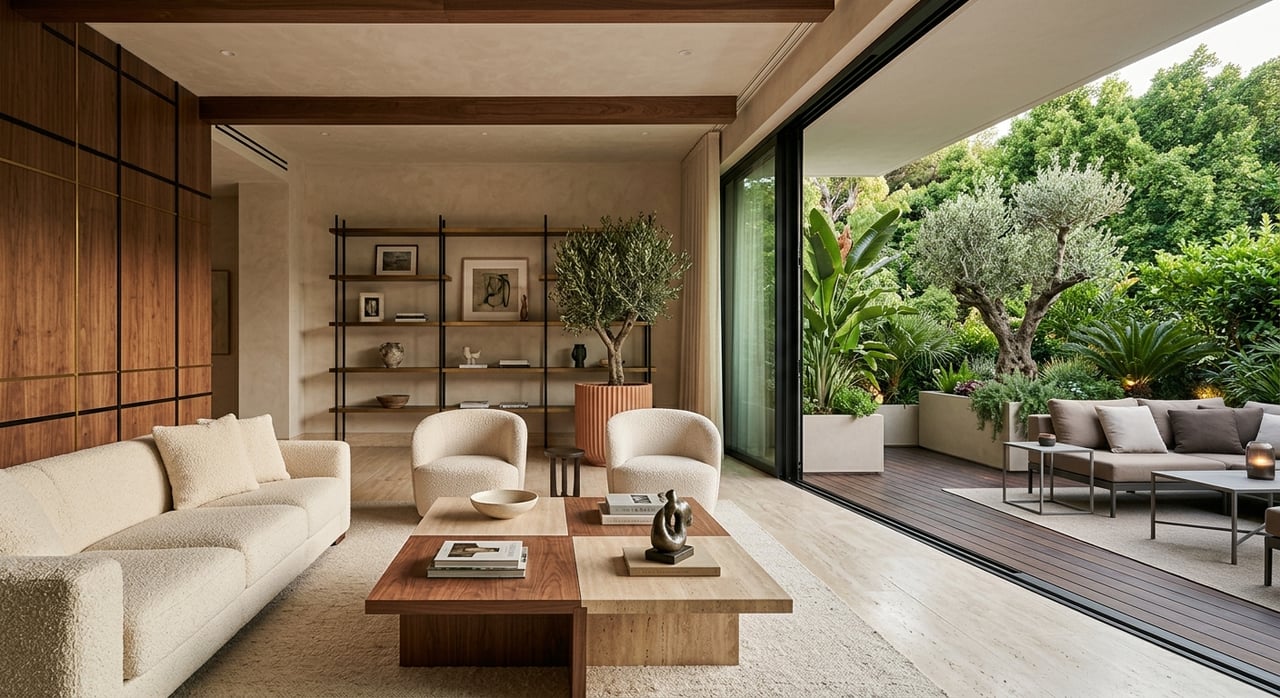
In Los Angeles, outdoor living often moves upward. Rooftop terraces, outdoor lounges, and private decks are a major part of the luxury condo experience. The emphasis is less about tropical escape and more about privacy, views, and seamless day-to-night use.
Miami outdoor living
Miami outdoor design often centers on:
- Shaded terraces
- Bay or ocean orientation
- Breezes and natural ventilation
- Pool decks and open-air circulation
- A strong connection to waterfront surroundings
Los Angeles outdoor living
Los Angeles outdoor design often centers on:
- Rooftop entertaining
- Private decks and terraces
- Outdoor dining and kitchens
- Fire features
- City, hillside, or ocean view capture
If you love a terrace that feels like part of a private resort, Miami may stand out. If you prefer an outdoor space that feels intimate, elevated, and view-driven, Los Angeles may feel more aligned.
Building Materials and Envelope Matter More in Miami
One of the clearest practical design differences is how Miami buildings respond to weather. Miami-Dade and Broward are located in the High Velocity Hurricane Zone, where exterior openings must be protected by shutters or impact-resistant windows.
That means impact glazing is not just a luxury feature. It is a major part of the building envelope and an important design consideration. The result is a glass-heavy aesthetic that still has to perform under demanding conditions.
Los Angeles does not begin from that same weather baseline. Because of its milder Mediterranean climate, luxury condo design can focus more heavily on openness, orientation, and the comfort of moving between inside and outside space without the same hurricane-driven design pressure.
Amenities Tell You a Lot About the Lifestyle
Amenity design is another area where the two cities diverge.
In Miami, newer luxury condo projects increasingly feel like private clubs. Many developments are branded, highly serviced, and designed around hospitality-style living. Amenities may include multiple pools, spas, tennis courts, resident dining spaces, guest suites, private elevator access, and curated service layers.
In Los Angeles, the amenity mix often feels more rooftop- and hotel-oriented. You still see concierge and valet service, fitness centers, pools, spas, and social spaces, but the experience is usually less beach-club-centric. Instead, it may feel more tied to urban hospitality, private entertaining, and elevated outdoor gathering areas.
Miami amenity style
Miami luxury condo amenities often include:
- Multiple pools
- Spa programming
- Private beach club access
- Resident restaurants or lounge concepts
- Dedicated service features such as private elevator access
- Lifestyle programming tied to branded residences
Los Angeles amenity style
Los Angeles luxury condo amenities often include:
- Rooftop pool and lounge areas
- Concierge and valet services
- Fitness and spa spaces
- Wine-tasting or social rooms
- Hotel-adjacent perks in some developments
- Outdoor entertaining spaces with city views
If Miami feels like a resort with residences attached, Los Angeles often feels like a polished private residence with hospitality layered in.
Privacy and Presentation Differ Too
Design is not just about materials and floor plans. It also shapes how a building presents luxury.
Miami often expresses luxury outwardly. Curved glass, dramatic silhouettes, branded interiors, and visually rich amenity spaces all contribute to a sense of arrival. For many buyers, that is part of the draw.
Los Angeles often expresses luxury more quietly. Privacy, restrained palettes, and a stronger sense of separation between public-facing amenities and personal living space can make the experience feel more understated. For design-focused buyers, that restraint is often the luxury.
Which Design Style Fits You Best?
The right answer depends on how you want your home to feel.
If you are drawn to bold architecture, tropical-modern influences, expansive terraces, and a more resort-like daily experience, Miami luxury condos may feel compelling. The design language is often more expressive, service-heavy, and connected to waterfront living.
If you prefer cleaner lines, rooftop living, quiet privacy, and outdoor spaces centered on views and flexibility, Los Angeles luxury condos may be a better fit. The design language tends to feel more relaxed, edited, and closely tied to the rhythms of Southern California.
For buyers comparing both markets, the best move is to look beyond finishes and ask how the building uses climate, space, and amenities to shape daily life. That is often where the true design difference becomes clear.
If you are exploring luxury condos in Los Angeles or weighing a bi-coastal move, DeWalt Meneses Group offers discreet, white-glove guidance tailored to design-driven buyers who value precision, privacy, and local expertise.
FAQs
What makes Miami luxury condos feel more resort-like?
- Miami luxury condos often combine tropical-modern design, larger terraces, water-oriented layouts, and hospitality-driven amenities such as pools, spas, dining spaces, and beach-club-style features.
Why do Miami luxury condos use so much impact glass?
- Miami-Dade and Broward are in the High Velocity Hurricane Zone, where exterior openings must be protected by shutters or impact-resistant windows.
What is the Los Angeles version of a Miami terrace-focused condo?
- In many Los Angeles luxury condo developments, the closest equivalent is a residence built around a rooftop terrace, large private deck, or outdoor amenity space with strong view orientation.
Is indoor-outdoor living still central to Los Angeles condo design?
- Yes. Los Angeles design continues to emphasize indoor-outdoor continuity, shaped by the region’s climate, geography, and long architectural history.
How do Miami and Los Angeles condo amenities differ?
- Miami often leans toward club-like, resort-style amenities with stronger branding and service layers, while Los Angeles more often emphasizes rooftop hospitality, private entertaining, and hotel-inspired shared spaces.